Dead-end to clinical trial: two years with SPARK-Bordeaux
Susanna Pietropaolo had years of mouse model data and a drug repurposing strategy for Williams-Beuren syndrome, a rare genetic condition with no existing treatment. What she did not have was patient cell data, a clinical partner, or any idea how to talk to the pharmaceutical industry. After two years in SPARK-Bordeaux, all of that has changed. She tells us how.
Published on
Most researchers know the feeling. Your project is solid. The data holds. But the funding landscape does not quite fit. Too advanced for certain early-stage calls, not ready enough for the next tier. You apply, you get turned down, and you wonder what you are doing wrong.
Susanna Pietropaolo was in that position when she found SPARK-Bordeaux. She had spent years working on Williams-Beuren syndrome, a rare genetic neurodevelopmental condition that currently has no approved treatment. Her approach: repurposing a drug already on the market, backed by years of animal model data showing real effects on behaviour, brain function, and cardiovascular measures. The science was there. The path forward was not.
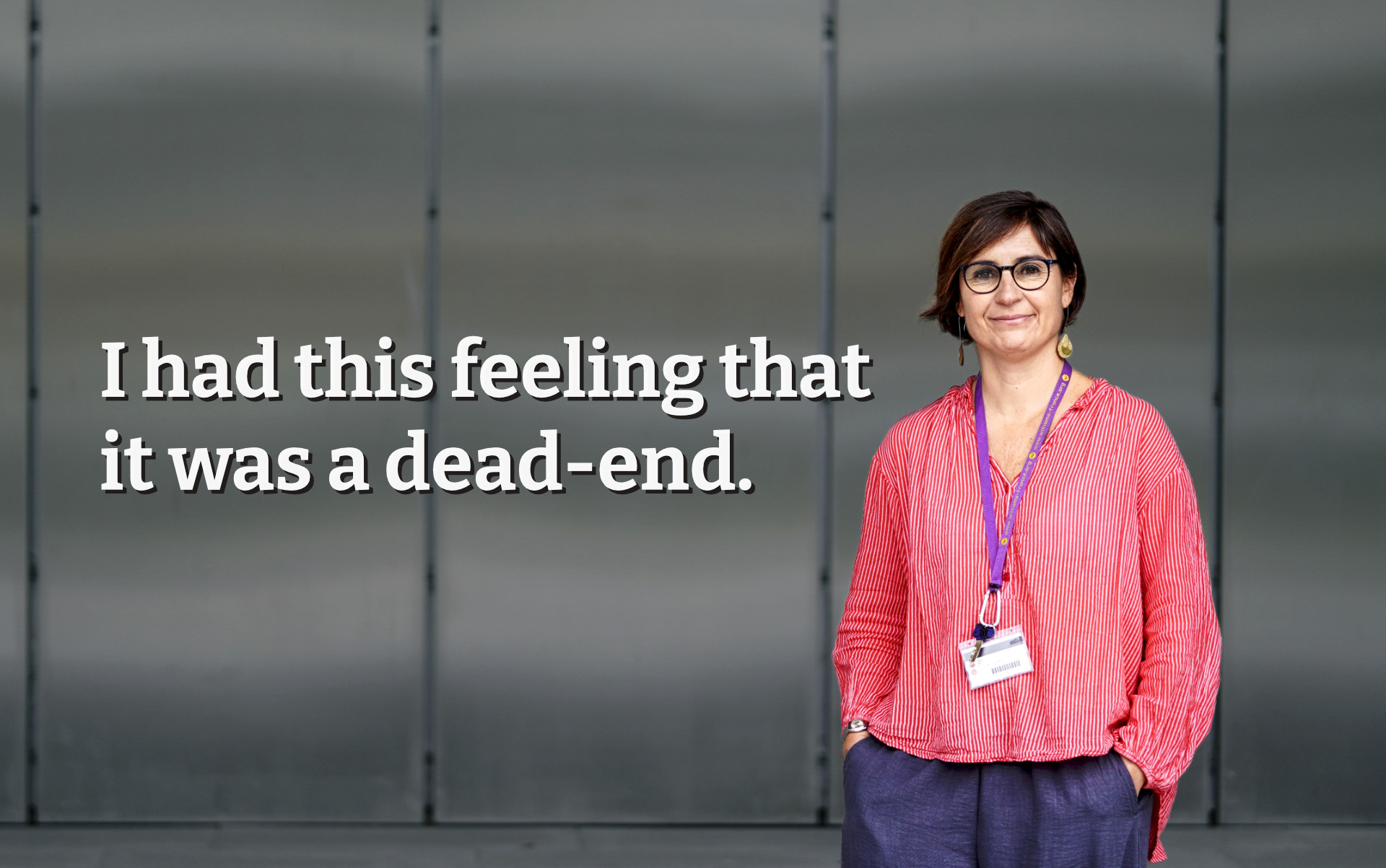
"I had this feeling that I was at a dead-end," she says.
Two years later, that dead-end has become a clinical trial.
Susanna Pietropaolo is Chargée de recherche at the Institut de Neurosciences Cognitives et Intégratives d'Aquitaine (INCIA, CNRS UMR 5287, University of Bordeaux). We sat down with her to talk about what changed, what surprised her, and what she would say to a colleague sitting on the fence about applying.
Photo by Parthiban Periyasamy
What did your project look like when you applied?
I had collected a large body of preclinical data showing the efficacy of a drug (already available on the market) in a mouse model of Williams-Beuren syndrome. It was a drug repurposing strategy. I had data across different parameters: behavioural, brain, and cardiovascular. What I did not yet have was data from patient-derived cell lines. That had been flagged by several investors as a critical missing piece.
Were you hesitant to apply?
My project sat in an awkward spot: too advanced for some funding calls, not advanced enough for others. My main doubt was whether SPARK would see it that way too, or whether the committee would decide it wasn't at the right stage.
But it turned out to be exactly why SPARK made a difference. It had this unblocking effect that I do not think other programmes would have had.
What did you expect SPARK to be?
I understood quickly that it was not just a grant. I had the feeling it was a programme that would help me develop things I could not develop on my own. Almost a learning tool as much as a funding one. That impression came fast, and it was different from anything I had encountered before.
So why did you apply despite the doubts?
Because I felt it could be the right tool, precisely because of the blocking situation I was in. One problem I kept running into was not being able to find the right partners. People to speak to with the right background and the right kind of support. I applied because I thought this could make a real difference.
I also want to say: the application itself is not a heavy. Compared to other programmes offering a similar amount of funding, the dossier is direct. You explain your idea clearly, without writing a dense administrative file. That matters. When you are already stretched thin, a lighter application process actually encourages you to go for it.
Without SPARK, I would not have been able to close the gap.
What did SPARK actually make possible?
The first was the patient cell line data. I did not have funding that could cover that type of experiment. SPARK gave me the financial support and helped me establish the collaboration I needed. That data was a critical gap, one that investors had flagged before I joined the programme. Without SPARK, I would not have been able to close it.
The second was the clinical trial. That was one of my objectives when I entered SPARK, but I was honestly not sure I could pull it off. I am sure I would not have managed it without the programme. SPARK helped me identify the right partners, find the right funding call, and secure the initial resources to get a first trial off the ground.
There is a third thing. For the first time, I became principal coordinator of an ANR biomedical grant. I am convinced that the way SPARK helped me develop and frame the project had a real role in that application being accepted.
My vision of clinical trials was very romantic
How has it changed the way you think?
Before SPARK, my vision of clinical trials was, I would say, romantic. I thought I just needed to convince some clinicians to do it. Through the programme, I started to understand what the real steps actually look like and how the different phases of clinical development work.
The second shift was understanding what it takes to make a project genuinely interesting to industry. I had a repurposing strategy and I assumed everyone would be eager to get involved. What I discovered is that the world of drug repurposing has its own rules. And if you do not understand those rules, you keep running in circles.
When I entered SPARK, I did not even know what a Target Product Profile was. The programme helped me understand that you need to speak the right language to the right people. Otherwise your project does not get through, no matter how good the science is.
SPARK also helped me become more strategic. I now have enough experience to judge whether a funding call actually fits my project at its current stage. Before SPARK, I was trying everything.
One more thing: the SPARKee community. The regular meetings with other researchers in the programme, the webinars, the chance to see your project through the lens of completely different approaches and disease areas. That perspective is rare. We researchers have a tendency to get locked inside our own world. SPARK keeps pulling you out of it.
Apply. The support is fundamentally different.
What would you say to a researcher who is thinking about applying but is not sure?
Apply.
SPARK is not just a funding mechanism. Even if the amount may seem modest compared to other programmes, what you get is fundamentally different. For researchers working at the crossroads of science and real-world impact, for those stuck in a situation where nothing quite fits, SPARK is one of the few options that can genuinely help right now.